 admin
admin 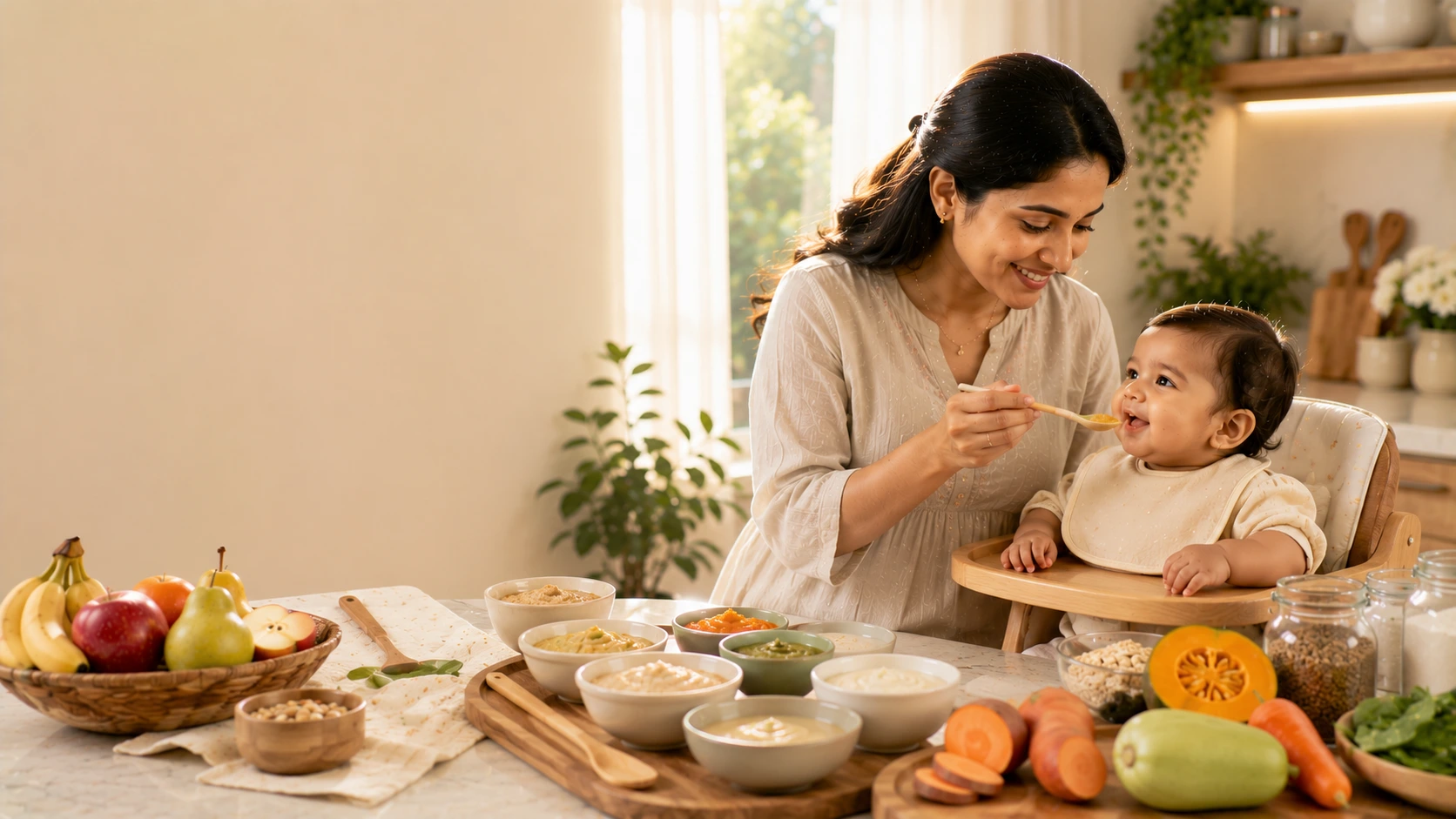
Introducing baby food is one of the biggest milestones in a baby’s first year. For many parents, especially first-time mothers and fathers, it is also one of the most exciting and confusing stages. Questions such as “Is my baby ready?”, “Which foods should I start with?”, and “What if my baby refuses to eat?” are completely normal.
The transition from exclusive milk feeding to baby nutrition through complementary foods is about much more than simply adding new tastes. It is an opportunity to help babies explore different textures, develop feeding skills, and gradually meet their growing nutritional needs while continuing breastfeeding or formula feeding.
Across India, families often receive advice from grandparents, neighbours, online communities, and social media. While much of this guidance is well-intentioned, not all recommendations reflect current pediatric advice. Understanding the signs of readiness and following a simple feeding approach can help parents introduce first foods for babies with greater confidence.
Many parents also begin exploring healthy baby food, clean ingredient baby food, and age-appropriate nutrition options during this stage. Brands such as Tiny Tums reflect the growing preference for preservative-free nutrition and ingredient transparency, giving families additional choices alongside home-prepared foods.
What Does “Starting Solids” Mean?
Quick Answer
Starting solids means introducing foods other than breast milk or infant formula while continuing milk feeding. This process is called complementary feeding because solid foods complement, rather than replace, milk during the early months of introduction.
For most babies, the goal is not to eat large quantities immediately. Instead, it is to:
- Explore new flavours
- Experience different textures
- Develop chewing and swallowing skills
- Learn how to eat from a spoon or with their fingers when appropriate
- Gradually expand baby nutrition
Parents sometimes worry if their baby eats only a few spoonfuls at first. This is completely expected for many infants as they learn a new skill.
Why This Stage Matters
Introducing solids helps babies gradually become familiar with family foods while continuing to receive milk as their primary source of nutrition during the early stages.
This period also supports:
- Oral motor development
- Sensory exploration
- Family mealtime participation
- Healthy eating habits later in childhood
Parent Scenario
Neha, a first-time mother in Pune, expected her six-month-old son to finish an entire bowl of puree on the first day. Instead, he tasted only a few spoonfuls before losing interest. After speaking with her pediatrician, she realised that early feeding is about learning rather than quantity. Over the following weeks, her baby slowly became more comfortable trying different foods.
Signs Your Baby May Be Ready for Solids
Quick Answer
Rather than focusing only on age, parents should also look for developmental signs that indicate readiness for baby food.
Every baby develops at their own pace, but healthcare professionals generally recommend introducing complementary foods when developmental readiness and age align.
Baby Readiness Checklist
- Your baby may be ready if they can:
- Hold their head steady.
- Sit with minimal support.
- Show interest in family meals.
- Open their mouth when food approaches.
- Move food toward the back of the mouth instead of automatically pushing it out.
- Reach for food or watch others eat with curiosity.
Signs That Usually Mean “Wait a Little Longer”
- Difficulty holding the head upright.
- Limited sitting control.
- No interest in food.
- Strong tongue-thrust reflex that pushes food back out immediately.
Parents should remember that readiness looks slightly different for every baby. Comparing babies of the same age often creates unnecessary anxiety because developmental milestones naturally vary.
Readiness vs Common Misconceptions
| Common Belief | Reality |
| Bigger babies should start solids earlier. | Size alone does not determine readiness. |
| Babies who wake frequently at night need solids immediately. | Night waking is not considered a reliable sign of readiness. |
| Babies should finish a full meal on day one. | Small tastes are completely normal during the learning stage. |
| Refusing food once means the baby dislikes it forever. | Babies often need repeated exposure before accepting new foods. |
Recommended Age for Introducing Foods
Quick Answer
Current guidance from leading health organizations recommends introducing complementary foods at around 6 months of age, while continuing breastfeeding or infant formula, unless advised differently by a healthcare professional.
Introducing solids too early may not provide additional benefits, while waiting significantly longer than recommended without medical guidance can also make it harder for babies to develop feeding skills.
Age-Wise Feeding Guide
| Baby’s Age | Feeding Focus |
| Birth to around 6 months | Breast milk and/or infant formula as recommended. |
| Around 6 months | Begin introducing first foods for babies while continuing milk feeding. |
| 6 to 8 months | Gradually increase food variety and texture based on your baby’s development. |
| 9 to 12 months | Encourage more family foods prepared in an age-appropriate way while continuing milk feeds. |
What Should Parents Prioritise?
Instead of introducing many foods at once, focus on:
- Age-appropriate textures.
- Variety over perfection.
- Consistency rather than large portions.
- Observing your baby’s feeding cues.
- Introducing new foods patiently.
Many Indian families begin with familiar homemade foods prepared to suit their baby’s developmental stage. Others may also include carefully selected healthy packaged foods for babies when convenience is needed. Increasingly, parents look for products with simple ingredients, minimal processing, and preservative-free formulations. This growing preference has led brands such as Tiny Tums to focus on age-appropriate nutrition and ingredient transparency during the transition to solids.
As your baby progresses through this exciting stage, remember that learning to eat is a gradual journey. Building confidence, exploring new flavours, and creating positive mealtime experiences are often more important than how much food is eaten in the first few weeks.
Common First Foods Parents Choose
Choosing the first baby food can feel overwhelming, but it does not have to be complicated. The goal is to introduce simple, soft foods that are appropriate for your baby’s age and developmental stage while continuing breast milk or formula.
First Foods Table
| Food Category | Examples | Why Parents Choose Them |
| Fruits | Mashed banana, steamed apple puree, pear puree | Naturally soft and easy to prepare |
| Vegetables | Pumpkin, sweet potato, carrot, bottle gourd | Mild flavour and smooth texture |
| Cereals | Rice porridge, oat porridge, ragi prepared appropriately | Familiar first complementary foods in many Indian homes |
| Protein Sources | Well-cooked mashed lentils, mashed beans | Introduce variety as advised by your pediatrician |
| Dairy (where appropriate) | Plain curd in suitable amounts | Can add variety depending on your baby’s feeding plan |
Every baby is unique. Some babies happily accept vegetables first, while others may prefer fruits. Patience and repeated exposure often matter more than finding the “perfect” first food.
Parent Tips
✔ Introduce one new food at a time.
✔ Offer soft textures that are easy to swallow.
✔ Watch your baby’s response before introducing another unfamiliar food.
✔ Continue breast milk or infant formula alongside complementary feeding.
Parents often compare their baby’s eating with others, but appetite and food acceptance naturally vary from child to child.
Foods to Introduce Slowly
Introducing new foods gradually allows parents to observe how their baby responds while making mealtimes calmer and more manageable.
Foods Worth Introducing One at a Time
| Food Type | Why Introduce Gradually |
| New fruits | Helps babies experience different tastes individually |
| New vegetables | Makes it easier to recognise preferences |
| Protein-rich foods | Supports gradual dietary variety |
| Multi-ingredient meals | Easier to identify which foods your baby has already tried |
This gradual approach is not about creating fear around food. It simply helps parents stay organised during the early months of complementary feeding.
Simple Feeding Routine
Instead of introducing several unfamiliar foods in one day, consider this pattern:
- Continue regular milk feeds.
- Offer one new food in a small amount.
- Repeat the food over the next few days if appropriate.
- Introduce another new food afterward.
Parent Scenario
A family in Chennai wanted their daughter to experience many flavours quickly. Rather than offering several new foods together, they introduced one food every few days. Within a few weeks, their baby had explored a wide range of fruits, vegetables, and cereals while the parents felt more confident about each new introduction.
Common Mistakes First-Time Parents Make
Most parents make small mistakes while learning to feed their baby, and that is completely normal. Feeding is a learning process for both babies and parents.
Common Mistakes
| Mistake | Better Approach |
| Expecting large portions immediately | Focus on exploration instead of quantity |
| Comparing babies | Remember every baby develops differently |
| Giving up after one refusal | Offer the food again on another day |
| Introducing many foods together | Introduce new foods gradually |
| Turning meals into a struggle | Keep feeding calm and pressure-free |
Myth vs Fact
| Myth | Fact |
| Babies should love every new food immediately. | Many babies need several opportunities before accepting a new taste. |
| Homemade food is always the only good option. | Both homemade meals and carefully selected healthy packaged foods for babies can fit into a balanced feeding routine. |
| A baby who eats less is automatically unhealthy. | Appetite naturally changes from day to day. |
| Feeding should follow social media schedules exactly. | Your baby’s development and your pediatrician’s advice should guide feeding decisions. |
Many parents also worry about convenience when travelling or returning to work. During these situations, carefully chosen healthy baby food with simple ingredients may provide practical support alongside homemade meals. Tiny Tums reflects the growing demand for preservative-free, age-appropriate nutrition options designed to support modern families without replacing balanced home feeding.
Creating a Positive Feeding Experience
Positive feeding experiences help babies build confidence around food while reducing stress for parents.
Practical Ways to Make Mealtimes Enjoyable
✔ Feed when your baby is calm and alert.
✔ Minimise distractions such as television or mobile phones.
✔ Allow your baby time to explore food.
✔ Smile and encourage without forcing bites.
✔ Accept that messy eating is part of learning.
✔ Celebrate progress instead of focusing only on quantity eaten.
Parent-Friendly Feeding Checklist
| Goal | Practical Action |
| Build confidence | Keep meals relaxed and predictable |
| Encourage curiosity | Offer colourful fruits and vegetables |
| Develop healthy habits | Eat together as a family whenever possible |
| Support baby nutrition | Introduce a variety of foods over time |
| Reduce feeding anxiety | Focus on long-term progress rather than daily perfection |
Building Healthy Habits Early
The feeding habits established during infancy often influence future child nutrition, healthy eating habits for kids, and healthy food for kids. Introducing a variety of nutritious foods in a supportive environment helps children become more comfortable exploring new tastes as they grow.
Parents increasingly look for simple ingredient lists, age-appropriate nutrition, and preservative-free options that fit busy family routines. Alongside homemade meals, brands such as Tiny Tums represent this growing focus on ingredient transparency and healthier beginnings for babies transitioning to solids.
Internal Reading Recommendations
As your baby continues to grow, you may also find these topics helpful:
- Baby Feeding Milestones: Understanding how feeding skills develop during the first year.
- Homemade vs Packaged Baby Food: Comparing convenience, nutrition, and ingredient transparency.
- Pregnancy Nutrition Cluster: Explore practical guidance that supports healthy eating from pregnancy through your baby’s early years.
References
- World Health Organization
https://www.who.int/news-room/fact-sheets/detail/infant-and-young-child-feeding - UNICEF
FAQs
When should babies start eating solids?
Most health organizations recommend introducing complementary baby food at around 6 months of age, while continuing breastfeeding or infant formula. Readiness should also be based on developmental signs, such as good head control, the ability to sit with support, and an interest in food. Your pediatrician can help determine the right time for your baby.
What foods should babies try first?
Good first foods for babies are soft, simple, and easy to swallow. Common choices include mashed banana, steamed apple puree, pumpkin puree, sweet potato, rice porridge, oats, ragi, and well-cooked mashed lentils. Introduce one new food at a time and continue breast milk or formula as the primary source of nutrition during the early stages of complementary feeding.
How do I know my baby is ready?
Your baby may be ready for solids if they:
- Can hold their head steady.
- Sit with minimal support.
- Show interest in family meals.
- Open their mouth when food is offered.
- Move food toward the back of the mouth instead of immediately pushing it out.
Age and developmental readiness should both be considered before introducing baby food.
What foods should I avoid initially?
Avoid foods that may pose a choking risk, such as whole nuts, whole grapes, popcorn, and hard raw vegetables. Foods with added salt or sugar are generally not recommended for young babies. Honey should not be given to babies under 12 months because of the risk of infant botulism. Always introduce new foods gradually and consult your pediatrician if you have questions about your baby’s feeding plan.