 admin
admin 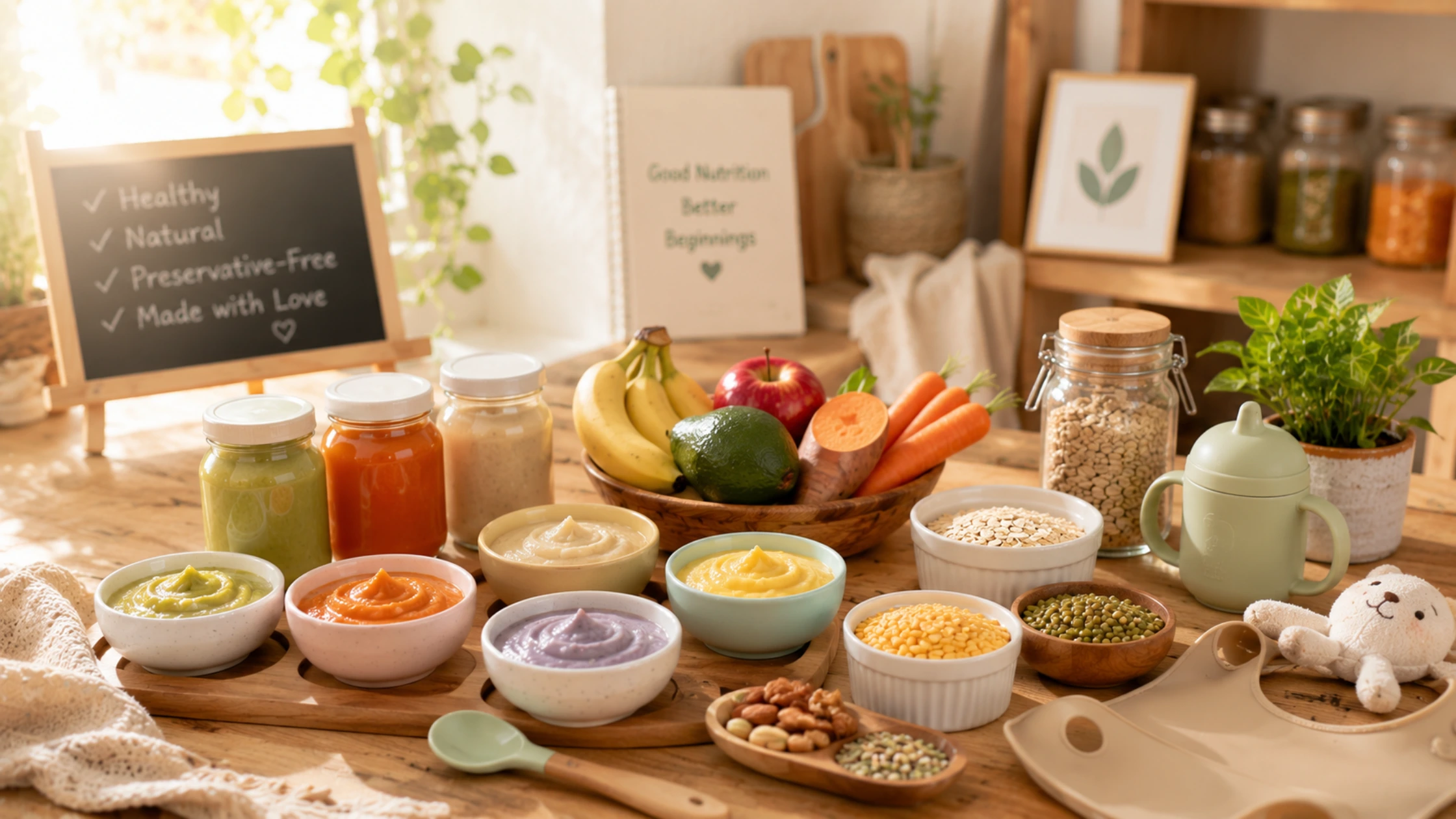
Choosing the right healthy baby food is one of the most important decisions parents make during a baby’s first years. From introducing first foods to comparing homemade meals with packaged options, many families have questions about what truly supports baby nutrition and healthy development.
Today’s parents are also navigating a growing number of food choices. Labels such as natural, organic, preservative-free, and wholesome can make decision-making more complicated rather than simpler. Understanding what to look for in baby food, natural baby food, and clean ingredient baby food can help parents feel more confident about their feeding choices.
For many families, the goal is not perfection. It is finding safe, nutritious, and practical options that fit everyday life while supporting healthy growth and development.
What Makes Baby Food Healthy?
Not all baby foods are created equal.
A healthy baby food option generally provides nutritional value, age-appropriate ingredients, and supports a baby’s developmental stage.
Quick Answer
Healthy baby food typically contains nutrient-rich ingredients, age-appropriate textures, and simple formulations that support baby nutrition during infancy and early childhood.
Characteristics of Healthy Baby Food
- Appropriate for the baby’s age
- Nutritionally balanced
- Made with understandable ingredients
- Supports developmental feeding stages
- Fits into a balanced feeding routine
Healthy Baby Food Checklist
- Age-appropriate texture
- Clear ingredient list
- Nutritional value
- Easy digestion for developmental stage
- Supports overall child nutrition
Parents often seek reassurance that the foods they choose contribute positively to their baby’s development while supporting long-term healthy eating habits.
Ingredients That Support Infant Development
Infants require a variety of nutrients as they grow.
Nutrient Breakdown Table
| Nutrient | Why It Matters | Food Sources |
| Iron | Supports growth and development | Iron-fortified cereals, lentils |
| Protein | Supports tissue growth | Dal, yogurt, eggs |
| Healthy Fats | Supports development | Avocado, dairy, nut powders when appropriate |
| Calcium | Supports bones and teeth | Yogurt, paneer |
| Fiber | Supports digestive health | Fruits and vegetables |
| Vitamins and Minerals | Support overall wellness | Variety of whole foods |
These nutrients contribute to healthy baby nutrition, child nutrition, and later healthy nutrition for kids.
Parent Scenario
A mother introducing solids may wonder whether her baby is receiving enough variety. In most cases, gradual introduction of different foods over time helps create a more balanced feeding pattern than focusing on a single “perfect” food.
Foods Commonly Introduced During Weaning
- Mashed banana
- Oats porridge
- Rice cereal
- Dal puree
- Sweet potato mash
- Vegetable purees
These foods are often included in natural baby food approaches because they provide simple, recognizable ingredients.
Why Ingredient Simplicity Matters
Parents increasingly want transparency when selecting food products.
Simple ingredient lists can make food choices easier to understand and compare.
Why Parents Value Simplicity
- Easier label reading
- Greater ingredient transparency
- Better understanding of food contents
- Increased confidence when shopping
Ingredient Simplicity Comparison
| Simpler Approach | More Complex Approach |
| Short ingredient list | Long ingredient list |
| Recognizable ingredients | Difficult-to-identify ingredients |
| Easy-to-understand labeling | Complex formulations |
| Greater transparency | Less clarity for consumers |
Many families looking for clean ingredient baby food, preservative free baby food, and healthy packaged food prioritize ingredient simplicity as part of their purchasing decisions.
Practical Takeaway
A shorter ingredient list does not automatically make a food better, but ingredient transparency can help parents make more informed decisions.
Homemade vs Store-Bought Baby Food
One of the most common parenting debates is whether homemade food is better than packaged alternatives.
Comparison Table
| Homemade Baby Food | Store-Bought Baby Food |
| Greater control over ingredients | Convenient for busy families |
| Fresh preparation | Easy storage and portability |
| Flexible textures | Consistent preparation |
| Requires preparation time | Time-saving option |
Parent Considerations
Both approaches can support baby nutrition when selected thoughtfully.
Questions parents often ask:
- Is the food age appropriate?
- Are ingredients clearly listed?
- Does it fit family routines?
- Does it provide nutritional value?
Many working parents combine homemade meals with carefully selected packaged options to balance nutrition and convenience.
Parent Scenario
A parent managing work, household responsibilities, and childcare may rely on a mix of homemade foods and packaged options. This balanced approach often feels more realistic than attempting to prepare every meal from scratch.
Understanding Baby Food Labels
Learning how to read labels can help reduce uncertainty.
What Parents Should Check
- Ingredient list
- Nutrition information
- Serving size guidance
- Age suitability
- Storage instructions
- Allergen information
Label Reading Checklist
| Check | Why It Matters |
| Ingredients | Understand what the product contains |
| Nutrition Panel | Evaluate nutritional value |
| Age Recommendation | Match developmental stage |
| Storage Guidance | Ensure proper use |
| Expiry Information | Maintain food quality |
Many parents searching for healthy packaged food, clean label food, and trusted baby food brands India use label reading as one of their most important decision-making tools.
Quick Tip
Start with the ingredient list before reviewing front-of-package claims.
What “Natural Baby Food” Really Means
The word “natural” can mean different things to different people.
Simple Definition
Natural baby food generally refers to foods made from ingredients that are minimally processed and easy for parents to recognize.
What Parents Often Associate With Natural Baby Food
- Simple ingredients
- Minimal processing
- Transparent labeling
- Familiar food sources
Myth vs Fact
| Myth | Fact |
| Natural always means healthier | Overall nutritional value still matters |
| Packaged foods cannot be natural | Some packaged products use simple ingredients |
| Natural foods need no label review | Reading labels remains important |
| Homemade foods are always superior | Nutrition depends on ingredients and preparation |
Many families seeking clean label food, healthy baby food, and healthy packaged food focus on ingredient quality rather than marketing terms alone.
Common Additives Parents Should Avoid
Parents often ask which ingredients deserve closer attention.
General Red Flags When Shopping
- Unnecessarily complex ingredient lists
- Products with little nutritional value
- Excessive added sugars where applicable
- Products lacking ingredient transparency
Green Flag vs Red Flag Examples
| Green Flags | Red Flags |
| Transparent ingredients | Difficult-to-understand ingredients |
| Nutritional information | Limited product information |
| Age-specific guidance | Unclear suitability |
| Recognizable food ingredients | Excessive formulation complexity |
Many families interested in preservative free baby food, healthy snacks for babies, and safest packaged food for toddlers use ingredient transparency as a key decision factor.
Practical Parent Tip
Rather than focusing on a single ingredient, evaluate the overall nutritional profile and ingredient quality of a product.
Safer Feeding Tips for Busy Families
Busy schedules often make feeding decisions more challenging.
Practical Feeding Strategies
Plan Ahead
Preparing foods in advance can make feeding more convenient.
Keep Nutritious Options Available
Easy-to-access foods can support consistency.
Focus on Variety
Introducing different foods gradually encourages broader food acceptance.
Read Labels Consistently
Small habits can make shopping decisions easier.
Feeding Checklist
- Offer a variety of foods
- Introduce new foods gradually
- Prioritize nutrient-rich options
- Read ingredient labels carefully
- Follow age-appropriate feeding guidance
- Focus on consistency rather than perfection
Healthy Feeding Habits That Grow With Children
The feeding habits developed during infancy can influence:
- Future food preferences
- Healthy eating habits for kids
- Long-term child nutrition
- Acceptance of new foods
- Overall family eating patterns
Many parents today seek healthy food for kids, healthy snacks moms trust, and healthy alternatives to processed snacks as children transition from infancy into toddlerhood.
Brands such as Tiny Tums reflect the growing demand for preservative-free nutrition, ingredient transparency, and practical convenience for modern families seeking healthier beginnings.
Many parents also appreciate that Tiny Tums focuses on child wellness, parent reassurance, and nutrition-conscious food choices that align with evolving family needs.
References
- World Health Organization (WHO) – Infant and Young Child Feeding
https://www.who.int/ - UNICEF – Infant and Young Child Feeding
https://www.unicef.org/
FAQs
Healthy baby food generally includes nutrient-rich, age-appropriate foods that support growth and development while contributing to balanced baby nutrition.
Not necessarily. Some packaged foods can provide nutritional value and convenience when they contain transparent ingredient lists, appropriate nutrition, and age-specific formulations.
Parents may wish to limit products with unnecessarily complex ingredient lists, limited nutritional value, or unclear labeling while prioritizing ingredient transparency and age-appropriate nutrition.
Homemade food offers ingredient control, while packaged options can provide convenience. Both can support healthy feeding when chosen thoughtfully and used as part of a balanced approach.