 admin
admin 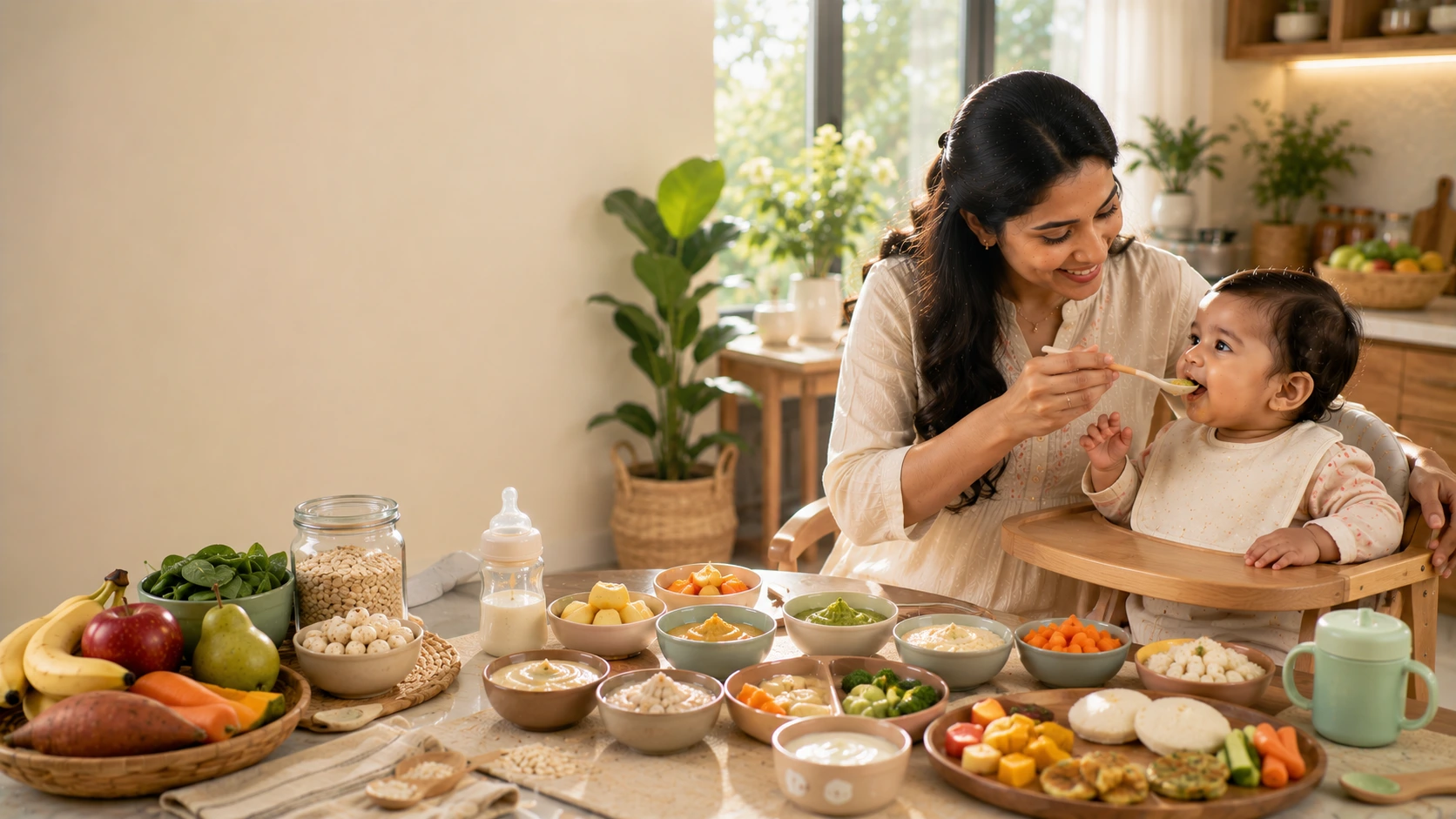
Watching your baby grow from exclusively drinking milk to exploring their first spoonful of food is one of the most exciting milestones of parenthood. Every new texture, taste, and feeding skill represents an important step in your baby’s development. While this journey is exciting, it can also leave first-time parents wondering whether they are introducing foods at the right time or offering the right choices.
Understanding baby nutrition during the first year does not require perfection. Babies develop at different rates, and small variations are completely normal. What matters most is gradually introducing age-appropriate foods, encouraging positive eating experiences, and supporting healthy growth with balanced baby food choices.
For many Indian parents, advice often comes from grandparents, relatives, social media, and healthcare professionals. Sometimes this advice is helpful, while at other times it can feel overwhelming. Having a simple baby feeding guide based on developmental milestones can make feeding feel much more manageable.
Many families today also look for nutrition options that balance convenience with ingredient transparency. During the transition to solids, brands such as Tiny Tums reflect the growing preference for age-appropriate, preservative-free nutrition that supports confident feeding alongside fresh homemade foods.
Why Feeding Milestones Matter
Quick Answer
Feeding milestones help parents introduce foods that match a baby’s physical development, chewing ability, swallowing skills, and nutritional needs. Following developmental readiness rather than rushing new foods encourages a safer and more enjoyable feeding experience.
Feeding Is More Than Eating
Many parents think feeding milestones are simply about introducing new foods. In reality, they involve learning several important skills, including:
- Sitting with support
- Controlling head and neck movements
- Moving food around the mouth
- Swallowing safely
- Picking up food independently
- Exploring different textures
- Developing hand-to-mouth coordination
These milestones gradually prepare babies for family meals during toddlerhood.
Why Developmental Readiness Matters
Introducing foods when babies are developmentally ready helps them:
- Build confidence with eating
- Experience a wider variety of tastes
- Develop oral motor skills
- Learn chewing gradually
- Reduce mealtime stress
- Support healthy child nutrition
Rather than comparing your child with others, focus on your baby’s own progress.
Typical Feeding Milestones During the First Year
| Age | Typical Feeding Milestones |
| Birth to 6 months | Breast milk or infant formula provides complete nutrition |
| Around 6 months | Begin complementary baby food while continuing milk feeds |
| 6 to 8 months | Smooth purees and soft mashed foods |
| 8 to 9 months | Slightly thicker textures and soft finger foods |
| 9 to 12 months | Greater variety of family foods with appropriate textures |
| Around 12 months | Eating many family foods while continuing a balanced diet |
These timelines are general guidelines. Your paediatrician can provide personalised advice based on your baby’s growth and development.
Parent Scenario
A family in Pune notices their six-month-old watching everyone eat during dinner, reaching toward food, and sitting with support. These developmental signs suggest the baby may be ready to begin complementary feeding alongside milk, making it an ideal time to introduce simple first foods after consulting their paediatrician.
Nutrition Goals From 6–8 Months
The period between six and eight months marks one of the biggest transitions in baby nutrition. Babies continue receiving most of their nutrition from breast milk or infant formula, while complementary foods gradually introduce new tastes, textures, and nutrients.
The goal during this stage is exploration rather than large quantities of food.
Nutrition Priorities
Focus on introducing foods that are:
- Soft and easy to swallow
- Rich in nutrients
- Freshly prepared
- Offered one at a time initially
- Suitable for your baby’s developmental stage
Recommended First Foods
Many Indian families begin with simple homemade options such as:
- Rice cereal
- Soft mashed banana
- Steamed and mashed sweet potato
- Mashed pumpkin
- Mashed carrot
- Well-cooked dal
- Ragi porridge
- Soft khichdi
- Mashed avocado
- Unsweetened yogurt if appropriate
These foods support healthy baby food choices while helping babies experience different flavours.
Sample First Food Progression
| Food Type | Examples |
| Fruits | Banana, pear, apple puree |
| Vegetables | Pumpkin, carrot, sweet potato |
| Cereals | Rice cereal, ragi, oats |
| Protein | Well-cooked dal, mashed lentils |
| Dairy | Plain yogurt where appropriate |
Offer one new food at a time and observe your baby for any signs of intolerance or allergy before introducing another new food.
Feeding Tips for 6–8 Months
✔ Continue breastfeeding or infant formula alongside complementary feeding.
✔ Introduce one new food every few days.
✔ Keep portions small.
✔ Let babies explore food with their hands when appropriate.
✔ Avoid adding sugar or excess salt.
✔ Make mealtimes calm and enjoyable rather than focusing on how much is eaten.
Remember, during these early months, babies are learning as much about eating as they are about food itself. The focus should remain on positive experiences that build confidence for future feeding stages.
Nutrition Goals From 9–12 Months
Between 9 and 12 months, babies become more confident eaters. Their curiosity grows, hand-eye coordination improves, and many begin enjoying a wider range of textures and self-feeding opportunities. During this stage, baby nutrition continues to rely on breast milk or infant formula, but complementary foods become a larger part of the daily diet.
The goal is to gradually expand food variety while encouraging independence and building lifelong healthy eating habits.
Nutrition Priorities for 9–12 Months
Focus on offering:
- A wider variety of fruits and vegetables
- Soft grains and cereals
- Protein-rich foods
- Healthy fats
- Iron-rich foods
- Different flavours and textures
- Opportunities for self-feeding
A diverse diet supports child nutrition, nutrition for growing children, and healthy development.
Age-Based Feeding Progression
| Age | Nutrition Focus | Examples |
| 9-10 months | Introduce thicker meals and finger foods | Soft idli pieces, ripe banana slices, steamed vegetables |
| 10-11 months | Increase food variety | Soft paneer, dal khichdi, oats, curd, seasonal fruits |
| 11-12 months | Encourage family meals | Chapati soaked in dal, vegetable upma, soft rice with vegetables |
Continue introducing foods gradually while observing your baby’s individual readiness.
Sample Daily Meal Pattern
| Meal | Example |
| Morning | Breast milk or formula |
| Breakfast | Ragi porridge with mashed fruit |
| Mid-morning | Soft fruit pieces |
| Lunch | Dal khichdi with vegetables |
| Evening | Yogurt or mashed fruit |
| Dinner | Soft rice with vegetables and lentils |
| Bedtime | Breast milk or formula |
Meal quantities vary for every baby. Appetite naturally changes from day to day.
How Food Textures Change Over Time
One of the biggest milestones in infant feeding is progressing through different food textures. Gradually increasing texture helps babies strengthen chewing muscles, improve oral coordination, and become more comfortable eating family foods.
Texture Progression Guide
| Stage | Texture | Examples |
| Around 6 months | Smooth puree | Fruit puree, vegetable puree |
| 6-8 months | Thick mash | Mashed potato, mashed dal, mashed banana |
| 8-10 months | Soft lumps | Soft khichdi, mashed vegetables with texture |
| 9-12 months | Finger foods | Soft fruit slices, steamed vegetables, idli pieces |
| Around 12 months | Family foods | Soft family meals cut into small pieces |
Moving through these stages gradually helps babies become confident eaters.
Texture Tips
✔ Introduce thicker textures slowly.
✔ Allow babies to explore food with their hands.
✔ Offer a variety of textures across the week.
✔ Do not rush to finely blend every meal once your baby is developmentally ready.
✔ Supervise all meals to support safe eating.
Parent Scenario
An eight-month-old in Hyderabad happily eats smooth purees but spits out foods with small lumps. Rather than returning to only purees, the parents slowly introduce thicker mashed vegetables over several weeks. With repeated exposure, the baby becomes more comfortable chewing and swallowing textured foods.
This gradual approach supports confidence without creating unnecessary mealtime stress.
Signs Feeding Skills Are Developing
Every baby develops feeding skills at their own pace, but several milestones indicate growing confidence with food.
Developmental Feeding Milestones Checklist
✔ Sits with minimal support during meals.
✔ Shows interest in family foods.
✔ Opens mouth when food is offered.
✔ Moves food around inside the mouth.
✔ Begins chewing instead of only sucking.
✔ Picks up soft finger foods.
✔ Attempts to hold a spoon.
✔ Drinks small sips from an open or training cup with assistance.
Feeding Skills by Age
| Age | Typical Skills |
| Around 6 months | Accepts spoon feeding and opens mouth for food |
| 7-8 months | Begins moving food side to side inside the mouth |
| 8-9 months | Picks up food using fingers |
| 9-10 months | Self-feeding improves |
| 10-12 months | Joins family meals and explores many textures |
These milestones are guides rather than strict timelines.
Practical Tips for Parents
To encourage positive feeding experiences:
- Offer meals at regular times.
- Introduce one new food at a time.
- Repeat foods even if initially rejected.
- Avoid forcing bites.
- Allow babies to explore safely.
- Celebrate curiosity rather than focusing only on quantity eaten.
Many parents also appreciate simple nutrition solutions during busy days. As babies transition through different feeding stages, brands such as Tiny Tums reflect the growing preference for preservative-free, age-appropriate nutrition that complements fresh homemade meals while maintaining ingredient transparency.
Feeding Milestone Summary
| Stage | Main Goal |
| 6-8 months | Introduce complementary foods and simple textures |
| 9-12 months | Expand food variety and encourage self-feeding |
| Around 12 months | Transition towards balanced family meals |
These milestones are intended to guide, not pressure, parents. Every child develops differently, and steady progress is more important than perfect timing.
Common Concerns Parents Experience
Every baby’s feeding journey is unique. While milestone charts are helpful, it is perfectly normal for parents to have questions as babies transition from milk to complementary foods. Understanding what is typical can reduce anxiety and help families approach baby nutrition with greater confidence.
Common Parent Concerns and Practical Guidance
| Concern | What Parents Can Do |
| “My baby eats very little.” | Appetite naturally varies from day to day. Focus on consistent growth, regular meals, and developmental progress rather than finishing every serving. |
| “My baby rejects a new food.” | Continue offering the food on different occasions without pressure. Babies often need multiple exposures before accepting a new taste or texture. |
| “My baby prefers only one food.” | Keep introducing a variety of foods while including familiar favourites. Variety develops gradually over time. |
| “My baby makes a mess while eating.” | Messy eating is a normal part of learning. Self-feeding helps build coordination and confidence. |
| “My baby gags on textured foods.” | Mild gagging can occur as babies learn to manage new textures. Offer age-appropriate foods and supervise meals. If persistent choking or swallowing concerns arise, seek medical advice. |
Remember These Feeding Facts
✔ Every baby develops at a different pace.
✔ Small variations in appetite are normal.
✔ Repeated exposure helps babies accept new foods.
✔ Positive mealtime experiences matter more than perfect intake.
✔ Avoid comparing your baby’s progress with other children.
Building Feeding Confidence
Confident feeding comes from consistency, patience, and understanding that learning to eat is a gradual developmental process. The aim is not simply to increase food intake but to help babies develop a healthy relationship with food from the beginning.
A Simple Feeding Confidence Framework
- Follow Your Baby’s Cues
- Watch for signs of hunger and fullness.
- Avoid forcing additional bites.
- Offer Variety
- Include different fruits, vegetables, grains, and protein sources across the week.
- Rotate meals to support child nutrition and expose babies to diverse flavours.
- Encourage Independence
- Allow babies to hold a spoon or pick up soft finger foods.
- Expect spills and messy mealtimes as part of learning.
- Create Calm Mealtimes
- Reduce distractions such as television or mobile phones.
- Eat together as a family whenever possible.
- Focus on Progress, Not Perfection
- Some meals will be more successful than others.
- Consistency over weeks and months is what supports healthy eating habits.
Feeding Confidence Checklist
✔ Continue breast milk or infant formula alongside complementary feeding as recommended.
✔ Introduce new foods gradually.
✔ Offer a variety of colours, textures, and flavours.
✔ Include iron-rich foods as complementary feeding progresses.
✔ Encourage self-feeding when developmentally appropriate.
✔ Maintain a predictable meal routine.
✔ Speak with your paediatrician if you have concerns about growth, feeding, or allergies.
Parent Scenario
Priya, a first-time mother in Chennai, worried because her nine-month-old preferred fruit over vegetables. Instead of removing fruits, she continued serving small portions of vegetables alongside familiar favourites like dal khichdi and mashed sweet potato. Over time, repeated exposure helped her baby gradually accept a wider range of foods.
This patient, balanced approach is often more effective than forcing foods or giving up after one refusal.
Supporting Healthy Feeding With Convenience
Busy family routines sometimes make preparing every meal from scratch difficult. Many parents therefore look for healthy packaged foods for babies that offer simple ingredient lists, age-appropriate nutrition, and transparency.
Brands such as Tiny Tums reflect this growing preference by providing preservative-free nutrition options designed to complement fresh homemade meals, helping parents balance convenience with informed food choices.
Key Takeaways
- Baby nutrition is a gradual journey that develops throughout the first year.
- Every baby progresses at their own pace.
- Focus on developmental readiness rather than strict timelines.
- Offer a variety of healthy baby food and age-appropriate textures.
- Encourage self-feeding and positive mealtime experiences.
- Consistency, patience, and reassurance build long-term feeding confidence.
References
1. World Health Organization (WHO)
Complementary feeding
https://www.who.int/health-topics/complementary-feeding
2. UNICEF
Infant and Young Child Feeding
FAQs
What should babies eat at different ages?
From birth to around six months, babies typically receive breast milk or infant formula. Around six months, complementary baby food can be introduced while continuing milk feeds. Foods gradually progress from smooth purees to mashed foods, finger foods, and eventually soft family meals by around one year of age.
When should babies try textured foods?
Most babies begin exploring thicker textures between 6 and 8 months, with increasingly textured foods and soft finger foods introduced between 8 and 12 months, depending on their developmental readiness.
How much food does a baby need?
The amount varies by age, appetite, and growth. During the first year, breast milk or infant formula remains an important source of nutrition while complementary foods are introduced gradually. Parents should focus on hunger cues and overall growth rather than exact portion sizes.
What feeding milestones are important?
Important milestones include sitting with support, showing interest in food, swallowing safely, accepting different textures, picking up finger foods, self-feeding, and gradually joining family meals. These developmental milestones help build confidence and support lifelong healthy eating habits.